🌊 Maritime Grandeur: Where the Sahyadris Meet the Arabian Sea
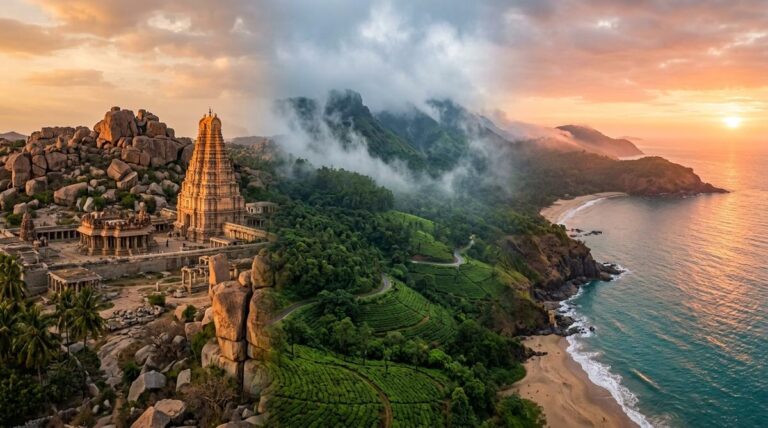
Coastal Karnataka, affectionately known as Karavali, represents a three-hundred-kilometer ribbon of emerald paradise sandwiched between the sheer Western Ghats escarpment and the azure Arabian Sea. Defined by estuarine river mouths, secluded golden beaches, sacred temple shorelines, and one of the world’s most aromatic seafood gastronomies, Karavali offers a deeply enriching cultural escape.
For discerning voyagers seeking an escape from overcrowded tourist trails, the Karavali coast of Karnataka provides an enchanting equilibrium between spiritual sanctity and raw coastal splendor. Stretching across the three coastal districts of Dakshina Kannada, Udupi, and Uttara Kannada, this maritime corridor has preserved ancient fishing livelihoods, distinct Tulu and Konkani linguistic traditions, dramatic theatrical rituals like Yakshagana, and an extraordinary culinary philosophy that celebrates the coconut palm, fresh river fish, and coastal spices.
The Geographic & Cultural Tapestry of Karavali
Geographically, Coastal Karnataka is cleaved by numerous swift rivers cascading westward from the Sahyadri mountains into the Arabian Sea—including the Netravati, Gurupura, Swarna, Sita, Sharavathi, Aghanashini, and Kali rivers. These estuarine waterways create sheltered backwaters, fertile mangrove ecosystems, and narrow coastal peninsulas before opening into pristine oceanic bays.
Culturally, the southern strip (Dakshina Kannada and Udupi) forms the heartland of Tulu Nadu, where the ancient Tulu language flourishes alongside unique matrilineal social traditions (Aliya Santana) and sacred ancestral spirit-worship ceremonies known as Bhoota Kola. Further north into Uttara Kannada, Konkani and Kannada dialects intermingle amid forested headlands where cliffs plunge directly into crashing surf.
The Spiritual Anchor: Coastal Temple Sanctuaries
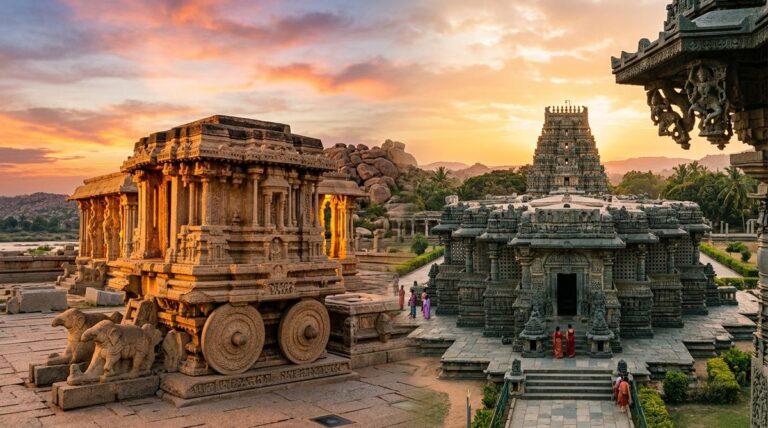
The coastline is traditionally revered as Parashurama Srishti—the land reclaimed from the ocean by the legendary sage Parashurama. Consequently, sacred shrines punctuate the maritime route at regular intervals, serving as beacons of cultural identity and architectural grace:
- Gokarna Mahabaleshwar Temple: Revered as the ‘Kashi of the South’, this ancient Shaivite pilgrimage center houses the venerated Atmalinga. According to legend, demon king Ravana was tricked by Lord Ganesha into resting the divine lingam on the earth here, where it became permanently rooted. Pilgrims bathe in the sacred ocean waves of Kotiteertha before entering the sanctum.
- Udupi Sri Krishna Matha: Founded in the thirteenth century by the Dvaita philosopher saint Sri Madhvacharya, this world-renowned Vaishnavite monastery is celebrated for its unique Kanakana Kindi—a silver-plated nine-holed window through which devotees view the deity. Legend recounts that the stone idol turned around to grant vision to the lower-caste saint-poet Kanakadasa who was barred from direct entry.
- Murudeshwar Shiva Temple: Dominating the sea-cliff of Kanduka Hill, Murudeshwar showcases an astonishing juxtaposition of antiquity and modern monumentalism. A hundred-and-twenty-foot seated bronze-colored statue of Lord Shiva towers over the crashing waves, flanked by a massive twenty-story Raja Gopuram equipped with a high-speed elevator offering bird’s-eye panoramas of the coastline.
- Kollur Mookambika Temple: Nestled at the foothills of the Kodachadri mountain range, Kollur is dedicated to Goddess Mookambika as the embodiment of Shakti, Saraswati, and Mahalakshmi. Established according to tradition by Adi Shankaracharya, the temple draws scholars, artists, and classical musicians for auspicious initiation rituals (Vidyarambham).
| Destination | Coastal District | Primary Character | Signature Attractions | Best Experiential Activity |
|---|---|---|---|---|
| Gokarna | Uttara Kannada | Spiritual town & rugged headland beaches | Om Beach, Kudle Beach, Mahabaleshwar Temple | Cliff-side beach trekking between secluded bays |
| Udupi & Malpe | Udupi | Pilgrimage center & fishing harbor | Sri Krishna Matha, St. Mary’s Island, Kaup Lighthouse | Sunset lighthouse climb & basaltic island boat excursion |
| Murudeshwar | Uttara Kannada | Monumental maritime pilgrimage shrine | Colossal Shiva statue, 20-story Gopuram, Netrani Island | Scuba diving at Netrani Island coral reefs |
| Mangaluru (Mangalore) | Dakshina Kannada | Port city, culinary capital, cultural hub | Panambur Beach, Kadri Manjunatha, St. Aloysius Chapel | Karavali seafood trail & heritage chapel fresco viewing |
Pristine Shores: From Gokarna’s Cliffs to St. Mary’s Basaltic Columns
The beaches of Coastal Karnataka diverge dramatically from conventional resort coastlines. Rather than uninterrupted flat sand, Karavali features dramatic volcanic rock formations, coastal hillocks, and estuaries that create intimate, scenic coves.
The Gokarna Five-Beach Trek: One of India’s premier coastal walking routes links Gokarna’s five distinct beaches across granite headlands. Beginning at Kudle Beach, a wide golden sand crescent backed by coconut groves, the trail ascends over rocky ridges to Om Beach, named for its distinctive natural shape resembling the sacred Devanagari ‘Om’ symbol. Continuing southward across steeper rocky paths brings intrepid hikers to Half Moon Beach and the remote Paradise Beach, accessible only on foot or by traditional fishing boats. The trek offers breathtaking vantage points where soaring sea eagles circle overhead and dolphins frequently breach the morning surf.
St. Mary’s Island (Coconut Island): Located four nautical miles off the coast of Malpe harbor in Udupi district, St. Mary’s Island is a designated National Geological Monument. The uninhabited island is globally renowned for its extraordinary columnar basaltic lava formations. Formed over sixty-six million years ago when the subcontinent cleaved away from Madagascar during late Cretaceous volcanic activity, the cooled basalt fractured into precise hexagonal and polygonal vertical pillars, creating a majestic natural geological amphitheater rising out of the turquoise sea.
🌋 Geological Marvel: Columnar Basalt
The polygonal columns of St. Mary’s Island were formed by the slow cooling and contraction of thick basaltic lava flows. As the magma solidified, tensile stress created symmetrical hexagonal fracture networks identical to the world-famous Giant’s Causeway in Northern Ireland, making it a site of immense scientific and aesthetic wonder.
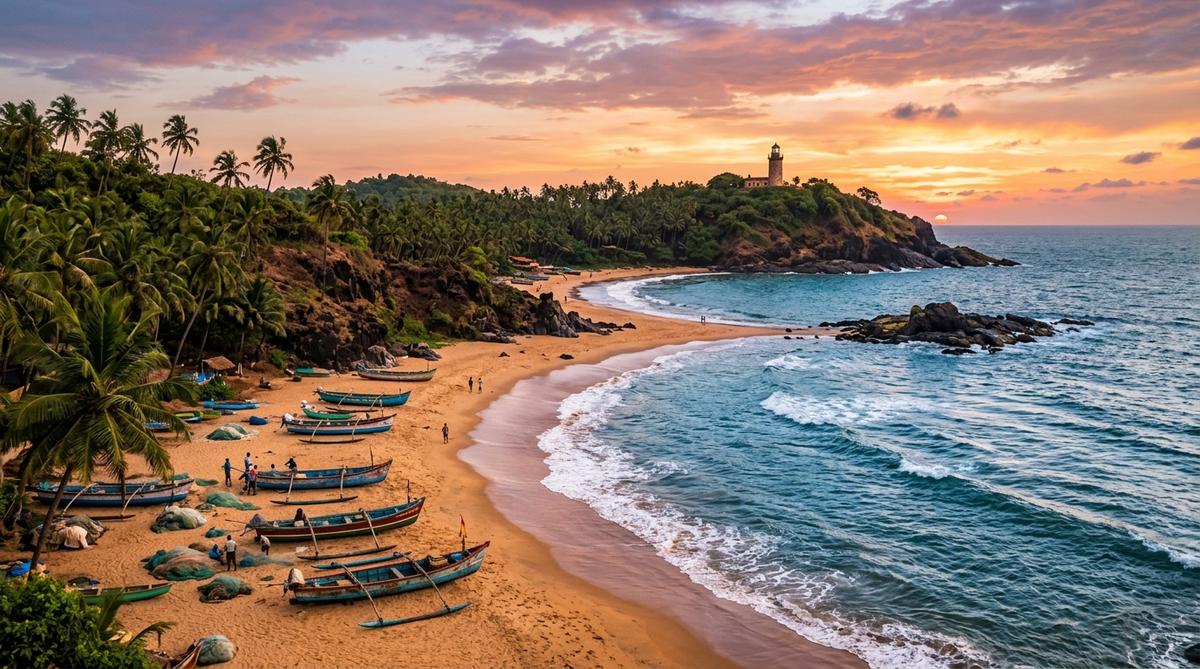
Kaup (Kapu) Beach and Lighthouse: Situated south of Udupi, Kaup Beach is anchored by a colossal black rock outcrop crowned by an iconic eighty-nine-foot lighthouse erected in 1901 during the British colonial era. Travelers can ascend the narrow spiral staircase inside the operational lighthouse during evening opening hours to witness the sweeping beam illuminate the pounding breakers, fishing skiffs, and distant palms as the sun sinks into the Arabian horizon.
Karavali Gastronomy: The Art of Coastal Coconut, Spice, and Seafood
Nowhere in India does the harmony between local agricultural harvests and maritime bounty express itself more vividly than in the kitchens of Coastal Karnataka. Karavali gastronomy is not a monolithic cuisine, but a sophisticated tapestry of distinct community traditions—including Bunt, Mogaveera, Goud Saraswat Brahmin (GSB), and Mangalorean Catholic food cultures.
The Pillars of Coastal Flavors
Traditional Karavali cooking relies upon four foundational culinary pillars: freshly harvested coconut (utilized as grated meat, thick cream, and cold-pressed oil), dried red Byadagi chilies (celebrated for their deep crimson hue and aromatic warmth without incendiary pungency), souring agents (sour tamarind, raw mango, or wild kokum), and aromatic spice pastes roasted gently in earthen pots.
- Kori Rotti (Bunt Specialty): The undisputed king of Tulu cuisine. Thin, paper-crisp wafers made from boiled rice paste are spread generously on a platter and drenched in boiling-hot, fragrant chicken curry simmered with roasted coriander, red chilies, fennel, and rich coconut milk. The crispy rotis slowly absorb the spicy gravy, creating an addictive contrast of textures.
- Anjal / Kane Masala Fry: Fresh kingfish (Anjal) or ladyfish (Kane) is marinated in a pungent paste of ground Byadagi chilies, ginger-garlic, and lemon juice, rolled in coarse semolina (rawa), and shallow-fried on heavy iron tawas to achieve a crackling golden crust sheltering tender, flaky fish meat.
- Neer Dosa with Chutney: Translating to ‘water dosa’, this feather-light, translucent crêpe is crafted from an unfermented batter of ground rice and water. Cooked briefly on a covered pan without oil, it is served piping hot alongside sweet coconut-jaggery milk or fiery red coconut chutney.
- Pathrode and Jackfruit Delicacies: Demonstrating seasonal vegetarian brilliance, Karavali households harvest tender colocasia leaves, spread them with spiced gram flour and tamarind paste, roll them into compact pinwheels, and steam them to create Pathrode. In summer, unripe and ripe jackfruit (Halasina Hannu) is transformed into steamed idlis, chips, and sweet fritters (Mulka).
| Culinary Tradition | Community Roots | Primary Mediums | Signature Dish | Flavor Profile |
|---|---|---|---|---|
| Bunt Cuisine | Agrarian & Martial Landlords | Coconut milk, Byadagi chilies, ghee | Kori Rotti, Marwai Sukka (Clams) | Robust, spicy, fragrant, rich |
| Udupi Brahmin | Temple Priests & Monasteries | Lentils, coconut, jaggery, asafoetida | Bisi Bele Bath, Rasam, Neer Dosa | Subtle, Satvik (no onion/garlic), balanced |
| Mangalorean Catholic | Colonial Luso-Indian Settlers | Vinegar, pork, aromatic roasts, ginger | Dukra Maas (Pork Bafat), Sorpotel | Piquant, earthy, spiced vinegar depth |
| Goud Saraswat (GSB) | Coastal Merchant Brahmins | Fish, raw banana, hing, coconut oil | Sungta Upkari (Prawns), Fish Ambat | Tangy, coconut-forward, comforting |
Living Performing Traditions: Yakshagana and Bhoota Kola
Coastal Karnataka’s nocturnal landscape comes alive with theatrical and spiritual rituals that have been performed continuously for over half a millennium. For visitors lucky enough to witness them, these performances reveal the deeply held spiritual ethos of the coastal populace.
Yakshagana (The Celestial Song): A spectacular classical-folk dance drama that combines operatic vocal narration (Bhagavata), intense rhythmic percussion (Chande and Maddale drums), improvisational dialogues, and mesmerizing acrobatics. Performers wear towering decorative headdresses (Pagade), elaborate facial makeup using mineral pigments, and glittering golden chest armor. Stories depict episodes from the Mahabharata, Ramayana, and regional Puranas, traditionally staged in open village courtyards from dusk until dawn.
Bhoota Kola (Spirit Worship): Deeply rooted in indigenous animistic worship, Bhoota Kola is a sacred ritual invocation of benevolent local demigods and ancestral guardian spirits (such as Panjurli, Guliga, and Jumadi). Channelers undergo days of fasting before donning coconut-leaf skirts and intricate facial paint. In trance states accompanied by sacred pipe music and torchlight, the oracle arbitrates village disputes, offers moral prophecies, and reaffirms the community’s bond with the surrounding ecology.
🎭 Cultural Respect: Attending Ritual Performances
Bhoota Kola rituals are sacred religious ceremonies, not tourist spectacles. Visitors permitted to attend village ceremonies must maintain solemn silence, refrain from flash photography, dress modestly, and respect the guidance of village elders throughout the proceedings.
Marine Conservation, Connectivity, and Travel Planning
Exploring the Karavali corridor is facilitated by the scenic Konkan Railway, an engineering marvel that threads through dozens of mountain tunnels, river bridges, and coastal marshes. Major rail stations at Mangaluru, Udupi, Kundapura, Murudeshwar, and Gokarna connect seamlessly with Mumbai, Goa, and Kerala.
Highway Journeys: National Highway 66 (formerly NH 17) parallels the coastline, offering exhilarating road trips. The iconic stretch between Kundapura and Bhatkal at Maravanthe Beach presents a breathtaking spectacle where the highway runs along a narrow spit of land bounded by the roaring Arabian Sea on the left and the calm Souparnika River on the right.
Marine Conservation and Adventure: Off the coast of Murudeshwar lies Netrani Island (Pigeon Island), Karnataka’s premier scuba diving and snorkeling destination. The coral reefs surrounding Netrani harbor rich marine life including sea turtles, butterflyfish, stingrays, barracudas, and occasional harmless whale sharks. Travelers engaging in marine adventures must practice reef etiquette, avoiding sunscreen contaminants and physical contact with fragile hard corals.
In summary, Coastal Karnataka is a multifaceted coastal paradise that leaves an indelible impression on all who wander its shores. Between the golden sunsets of Gokarna, the sacred reverberations of Udupi’s temple drums, the geological wonders of St. Mary’s Island, and the unforgettable aroma of roasted coconut curries, Karavali is a vibrant celebration of South India’s maritime soul.
Estuarine Ecology and Mangrove Habitats of Coastal Karnataka
Beyond its famous ocean beaches and religious shrines, Coastal Karnataka preserves an extraordinarily delicate network of estuarine ecosystems that support both biodiversity and traditional artisanal livelihoods. The confluence zones where rivers meet the Arabian Sea—such as the Aghanashini estuary in Kumta and the Swarna-Sita delta in Udupi—represent vital ecological buffers against coastal erosion and severe marine storms.
The Aghanashini river estuary in Uttara Kannada is particularly celebrated as an ecological marvel, recently designated as a Ramsar Wetland of International Importance. Free from industrial dams along its entire mountain course, the estuary maintains a pristine brackish-water environment where dense mangrove forests flourish. These mangroves, dominated by species such as Rhizophora mucronata and Avicennia marina, provide critical breeding nurseries for hundreds of marine fish, mud crabs, and edible oysters. Furthermore, indigenous coastal communities practice traditional salt-tolerant rice cultivation (known locally as Kagga agriculture) in submerged estuarine floodplains, a sustainable agro-ecological practice that has endured for centuries.
Coastal Craftsmanship: Woodcarving, Boat Building, and Handloom Weaving
The material culture of Karavali reflects a profound mastery of organic, coastal materials. For generations, coastal artisans have honed specialized craft traditions that are deeply intertwined with maritime trade and religious ceremonies:
- Traditional Fishing Skiff Architecture: In traditional fishing harbors such as Malpe, Honnavar, and Karwar, master carpenters construct ocean-going wooden vessels known as Manji and Pattemari. Built from durable local timber such as wild jackfruit and teak, these boats are fastened using copper rivets and sealed with natural tree resins and fish oil extracts, allowing them to navigate treacherous surf breaks during rough monsoon seas.
- Udupi Handloom Sarees: Woven in the coastal villages of Udupi and Dakshina Kannada, Udupi sarees are crafted from fine combed cotton using traditional pit looms. Celebrated for their exceptional breathability in humid maritime climates, the sarees feature distinctive checkered patterns, vegetable-dyed borders, and unique starching techniques utilizing sago and natural gum that lend the fabric a crisp, durable texture.
- Sandalwood and Teak Woodcraft: In regional craft hubs like Kumta and Honnavar, skilled artisans belonging to the Gudigar community carve intricate religious figurines, ornate lintels, and perfumed sandalwood boxes, continuing a decorative tradition that once adorned royal palaces and coastal merchant mansions.
🍃 Culinary Secret: The Magic of Kokum and Kachampuli
In Karavali gastronomy, tamarind is not the sole souring agent. Coastal kitchens extensively employ wild Kokum (Garcinia indica), whose dried purple rinds impart a refreshing, fruity tartness to fish gravies while acting as a natural digestive coolant. In the adjacent foothills, Kodavas distill wild fruit extracts into thick, fermented Kachampuli vinegar, demonstrating the sophisticated regional understanding of wild botanical preservation.
Sustainable Marine Tourism and Coastal Conservation Guidelines
As tourism footfalls along the Karavali coastal belt continue to expand, preserving the fragile marine environment and respecting traditional fishing communities requires mindful, eco-conscious visitor behavior. Travelers embarking on a coastal odyssey should integrate the following responsible tourism principles:
- Protection of Olive Ridley Turtle Nesting Sites: Secluded sandy beaches across Uttara Kannada, such as Kodi and Honnavar, serve as vital nocturnal nesting grounds for endangered Olive Ridley sea turtles between November and February. Avoid walking on dunes with bright flashlights, keep domestic pets leashed, and never disturb marked egg hatcheries monitored by local forest department conservation squads.
- Support Local Fisher Community Homestays: Rather than confining your patronage to large corporate resort chains, choose family-run coastal homestays and community-managed beach huts. This ensures that tourism revenues directly support local fishermen, boat operators, and traditional home cooks whose heritage makes Karavali so unique.
- Strict Elimination of Coastal Marine Litter: Plastic waste discarded on beaches inevitably enters estuarine waters, where it breaks down into toxic micro-plastics that choke fish stocks and coral reefs at Netrani Island. Always carry reusable steel water canteens, decline single-use plastic bags at local markets, and participate in voluntary beach cleanup initiatives.
Whether you find yourself navigating the dramatic cliff-top trails between Gokarna’s secluded beaches, tasting the fiery warmth of a freshly prepared Kane fish fry in Mangalore, or listening to the hypnotic drumming of a dawn temple ritual in Udupi, the Karavali coast offers an enchanting journey through one of India’s most vibrant and spiritually grounded maritime civilizations.