⛰️ The Land of the Younger Daughter: Cradle of South Indian Coffee
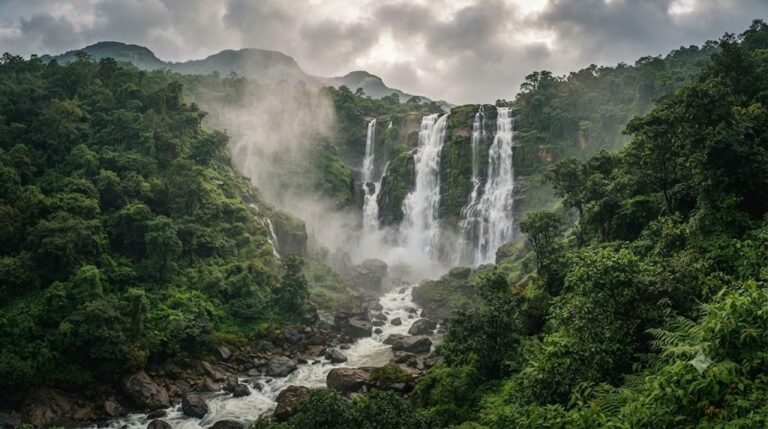
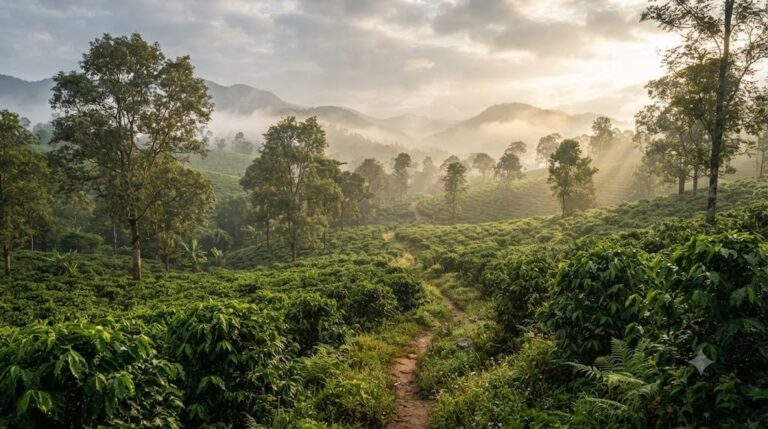
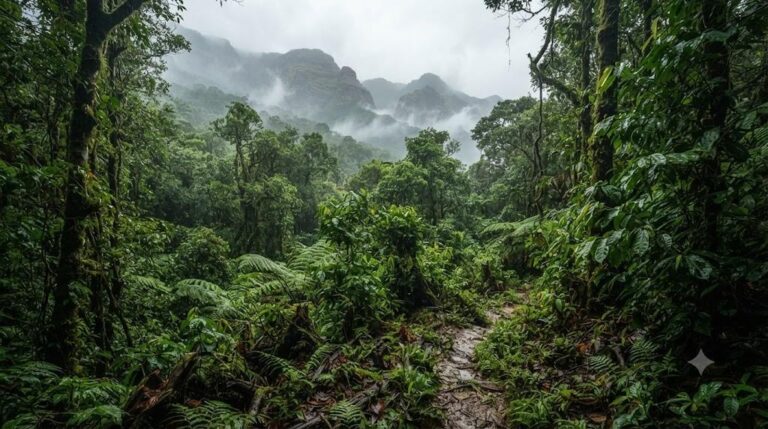
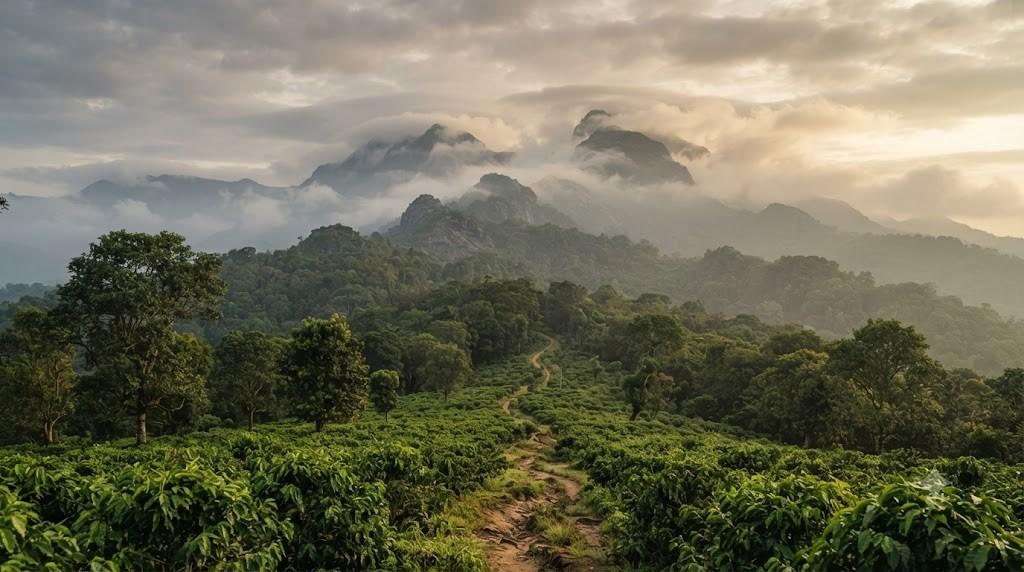
Cradled against the soaring crescent of the Chandra Drona mountain range in south-western Karnataka, Chikmagalur (literally translating to ‘the town of the younger daughter’) stands as the historic birthplace of coffee in India. Characterized by Karnataka’s highest mountain summits, ancient Sufi and Dattatreya pilgrimage caves, roaring mountain cascades, and pristine high-altitude Shola grasslands, Chikmagalur offers an exhilarating paradise for mountain trekkers, botanists, and coffee connoisseurs alike.
Situated at the foothills of the Western Ghats, the district of Chikmagalur possesses an extraordinary geographic, agrarian, and spiritual heritage. Legend recounts that in the tenth century, the benevolent chieftain Rukmangada of Sakkarepatna gifted this fertile highland valley as a wedding dowry to his beloved younger daughter, giving the town its poetic name. Today, Chikmagalur represents an awe-inspiring highland realm where rugged montane peaks soar to nearly two thousand meters above sea level, sheltering ancient rainforests that nurture some of the finest shade-grown coffees on the global market.
The Legend of Baba Budan: The Seven Smuggled Coffee Beans
The history of global coffee cultivation is inextricably intertwined with the dramatic slopes of Chikmagalur’s Bababudan Giri mountain range. In the early seventeenth century, the global coffee trade was zealously monopolized by the Ottoman Empire and Arab traders operating out of the Yemeni port of Mocha. Raw coffee beans were strictly roasted or parboiled prior to export to prevent foreigners from germinating coffee plants outside the Arabian Peninsula.
Around 1670 CE, a revered Indian Sufi mystic named Hazrat Shah Jamal Allah Maghribi—affectionately known by devotees as Baba Budan—was returning from a pilgrimage to Mecca. Deeply enamored by the invigorating beverage, Baba Budan was determined to bring the miraculous plant to his homeland to sustain ascetics during nocturnal meditation. At immense personal peril, he smuggled seven raw, fertile green coffee seeds out of Yemen, carefully strapping them against his chest beneath his rough woolen pilgrim garments.
The Birth of an Agro-Economic Empire
Upon returning to his mountain hermitage on the Chandra Drona range in Chikmagalur, Baba Budan planted the seven sacred beans in the fertile volcanic soil outside his meditation cave. The saplings flourished in the rich, mist-draped mountain climate, producing vigorous red cherries that were subsequently distributed to regional farmers and wandering monks.
By the nineteenth century, British planters recognized the commercial potential of these mountain slopes, establishing sprawling commercial coffee estates that transformed Chikmagalur into the engine of the South Asian coffee export economy. Today, the very mountain where those original seven seeds took root bears the revered name of Bababudan Giri, standing as an enduring symbol of agrarian daring and inter-cultural exchange.
| Mountain Summit / Trek | Elevation (Meters) | Difficulty Level | Landscape Highlights | Key Travel Attraction |
|---|---|---|---|---|
| Mullayanagiri Summit | 1,930 m | Moderate (Stone steps/trail) | Highest point in Karnataka, rolling montane meadows | Sunset temple peak, panoramic cloud seas |
| Bababudan Giri (Inam Dattatreya) | 1,895 m | Moderate (Crescent ridge trail) | Dramatic horseshoe ridge, sacred syncretic cave shrine | Pilgrimage cave, Manikyadhara waterfall |
| Kudremukh Peak | 1,894 m | Challenging (22 km wilderness trek) | Horse-face mountain shape, Shola grasslands | National park biodiversity, rolling green slopes |
| Z Point (Kemmangundi) | 1,450 m | Easy to Moderate (3 km hike) | Sheer vertical gorge edge, sunrise viewpoints | Raj Bhavan gardens, Hebbe Falls detour |
| Kallarathigiri Range | 1,550 m | Moderate | Dense montane cloud canopy, tea & coffee boundary | Untouched Shola tracts, birdwatching trails |
Summiting Mullayanagiri: The Roof of Karnataka
Soaring majestically to an altitude of one thousand nine hundred and thirty meters above sea level, Mullayanagiri is the highest mountain summit in the state of Karnataka. Named after the revered sage Mullappa Swamy, who according to regional folklore meditated in a natural stone cave near the peak, the summit is the ultimate pilgrimage and trekking destination for outdoor enthusiasts in South India.
The journey to Mullayanagiri begins along winding mountain roads carved into steep cliff faces, flanked by towering silver oaks draped in climbing pepper vines. From the designated base saddle, adventurers ascend a flight of roughly five hundred stone steps and rocky paths that trace the crest of an exposed grassy ridge. As hikers climb higher, the atmospheric pressure drops, crisp alpine winds howl across the ridge, and swirling cloud banks frequently envelop the trail in dense, dramatic whiteouts.
The Summit Sanctuary and Panoramic Panoramas
At the apex of Mullayanagiri sits a small, serene stone temple dedicated to Lord Shiva. Ringing the ancient iron bell at the summit as the morning mist parts reveals one of the most magnificent spectacles in peninsular India: an endless ocean of rolling green mountain ridges receding into the distant horizon like colossal green waves. On exceptionally clear winter evenings, the setting sun casts a golden crimson glow across the entire Western Ghats escarpment, painting the sky in fiery shades of amber and violet.
🥾 Trekker’s Advisory: The Mullayanagiri to Bababudan Ridge Trek
For seasoned wilderness trekkers, a dramatic twelve-kilometer high-altitude ridge trail connects Mullayanagiri with the Bababudan Giri range. Known as the ‘Blade Edge Ridge’, this challenging route traverses steep knife-edge grass saddles with sheer drops on either side, requiring excellent physical fitness, sturdy footwear, and avoidance during torrential monsoon gales.
Bababudan Giri and the Syncretic Dattatreya Peetha
Located sixteen kilometers northeast of Mullayanagiri, the Bababudan Giri range forms a massive horseshoe-shaped natural amphitheater known in classical texts as the Chandra Drona Parvatha. Beyond its geological majesty, the mountain is celebrated as one of India’s most extraordinary symbols of religious syncretism.
High on the mountain ridge lies the venerated cave shrine of Inam Dattatreya Peetha / Baba Budan Dargah. For centuries, this sacred subterranean cavern has been revered equally by Hindu and Muslim devotees. Hindus venerate the site as the holy hermitage of Lord Dattatreya—the divine trinity manifestation of Brahma, Vishnu, and Shiva—while Muslims revere it as the sanctuary of the Sufi saint Baba Budan. The shrine was traditionally overseen by a hereditary Muslim custodian (Sajjada Nashin), demonstrating the deep spiritual harmony that has historically characterized the cultural landscape of Malnad.
Manikyadhara Falls: The Stream of Pearls
A few kilometers beyond the cave shrine lies the picturesque Manikyadhara Falls (translating to ‘Stream of Pearls’). Cascading gently over mossy rock shelves, the crystal-clear mountain stream does not dry up even during the peak summer months. Local lore recounts that when Baba Budan and his disciples were parched with thirst during their mountain meditation, the saint prayed to the heavens, and four pure streams of water burst miraculously from the rock. Devotees bathe in the cool, mineral-rich waters, which are widely believed to possess therapeutic herbal healing properties.
Kemmangundi: Royal Summer Retreat of the Wodeyars
Situated fifty-five kilometers north of Chikmagalur at an altitude of one thousand four hundred and thirty-four meters lies Kemmangundi, also known as Sri Krishnarajendra Hill Station. In the early twentieth century, the visionary Maharaja of Mysore, Krishnaraja Wodeyar IV, was so captivated by the cool climate, rich red soil (from which the town derives its name: Kempu meaning red, Mannu meaning soil, and Gundi meaning pit), and panoramic mountain vistas that he established it as his official royal summer retreat.
The hill station is crowned by the magnificent Raj Bhavan gardens, renowned for their landscaped terraced lawns, heritage stone gazebos, and formal rose nurseries that overlook deep valleys. From Kemmangundi, scenic walking paths lead to Z Point—a dramatic vantage point perched on the edge of a sheer cliff that offers sweeping views over the Bhadra Tiger Reserve—and the thunderous cascades of Hebbe Falls, where mountain waters plunge over one hundred and sixty meters in two distinct stages into a deep, spray-filled forest pool.
🌺 Eco-Discovery: The Neelakurinji Phenomenon
The high-altitude montane grasslands of Bababudan Giri and Mullayanagiri are one of the rare natural habitats of the legendary Strobilanthes kunthiana (Neelakurinji) flower. This remarkable botanical species blossoms only once every twelve years, turning entire mountain slopes into a breathtaking, unbroken carpet of vibrant purplish-blue blossoms.
Bhadra Wildlife Sanctuary: The Tiger Heartland of Malnad
In the northern foothills of the Chikmagalur district lies the Bhadra Wildlife Sanctuary (Lakkavalli Tiger Reserve), encompassing nearly five hundred square kilometers of dense moist deciduous forests, towering bamboo brakes, and the expansive waters of the Bhadra Reservoir. Surrounded by the hills of Bababudan Giri and Mullayanagiri, Bhadra forms a vital ecological sanctuary within the Western Ghats.
Bhadra is celebrated globally by conservation biologists as one of the most successful community-relocation conservation projects in Asian history. Over four hundred rural families living inside the core tiger reserve were voluntarily and equitably relocated to peripheral lands, allowing the interior forest ecosystem to regenerate with phenomenal vigor. Today, the sanctuary supports thriving populations of royal Bengal tigers, Indian leopards, Asian elephants, sloth bears, gaur (Indian bison), and over two hundred and fifty species of birds, including the rare Malabar trogon and emerald dove.
Planning the Perfect Chikmagalur Expedition: Seasons and Ethics
To fully experience the diverse landscapes of Chikmagalur, travelers should carefully plan their itineraries based on climatic seasons and conservation protocols:
- The Post-Monsoon Window (September to November): The most visually spectacular season. Waterfalls roar with maximum volume, mountain streams are crystal clear, and the hills are draped in an intense emerald green. Temperatures are pleasantly cool, making it ideal for landscape photography and plantation walks.
- The Winter Trekking Season (December to February): Morning temperatures frequently drop to ten degrees Celsius, with dense ground fog hovering over coffee valleys. The weather is dry, crisp, and predictable, providing the safest conditions for summiting Mullayanagiri and navigating the Bababudan ridge trails.
- The Blossom Fragrance Season (March to April): Ideal for coffee lovers. The pre-monsoon blossom showers trigger the simultaneous blooming of millions of white coffee flowers, filling the entire district with an unforgettable jasmine-like fragrance.
In conclusion, Chikmagalur is a majestic mountain domain that bridges the sacred and the wild. From the legendary seven seeds of Baba Budan that gave birth to an agrarian empire to the wind-swept stone summit of Mullayanagiri touching the clouds, this corner of the Western Ghats invites travelers to slow their pace, breathe deeply of the mountain air, and immerse themselves in the timeless soul of the Sahyadri mountains.
The Botanical Science of Specialty Coffee Processing in Chikmagalur
The global reputation of Chikmagalur’s coffee rests not merely on its geographic terroir, but on the sophisticated biochemical science applied during post-harvest processing. In recent years, third-wave coffee estates across the Bababudan Giri and Mullayanagiri ranges have pioneered artisanal micro-lot processing methods that fetch record prices among international specialty roasters.
Beyond traditional washed and natural sun-dried techniques, master estate roasters employ honey processing—where the outer fruit skin is mechanically removed while leaving varying percentages of the sticky fruit mucilage (honey) adhering to the bean during slow drying. This controlled fermentation infuses the coffee with intense berry sweetness, stone fruit notes, and a velvety mouthfeel. Furthermore, experimental anaerobic fermentation—where whole coffee cherries are sealed inside stainless steel tanks purged of oxygen for dozens of hours—allows wild yeast strains to break down complex sugars, yielding coffees with exotic floral aromas of jasmine, passionfruit, and dark chocolate.
The Avian Diversity of Coffee Agro-Forestry Canopies
Because Chikmagalur’s coffee is grown beneath native shade trees rather than cleared monoculture fields, the estates serve as critical ecological sanctuaries for over two hundred species of resident and migratory birds. Naturalists strolling through shaded plantation trails routinely encounter the brilliant emerald flash of the Malabar trogon, the vibrant plumage of the Asian fairy-bluebird, the distinctive curved bill of the Indian grey hornbill, and the melodic morning whistle of the Malabar whistling thrush, proving that sustainable agriculture and biodiversity conservation can thrive in harmonious synergy.
🔬 Estate Heritage: The Central Coffee Research Institute (CCRI)
Located near Balehonnur in Chikmagalur, the Central Coffee Research Institute (CCRI), established in 1925, is one of the world’s premier agronomic research centers for coffee breeding. Scientists here developed disease-resistant, high-yielding Arabica strains such as Selection 795, which saved South Asian coffee farming from devastating leaf rust epidemics in the twentieth century.
The Art of Coffee Cupping and Estate Architecture in Malnad
For visitors exploring Chikmagalur’s coffee country, participating in a professional coffee cupping session represents the ultimate sensory education. Led by certified Q-graders, cupping evaluates the fragrance, aroma, flavor notes, aftertaste, acidity, body, and balance of freshly roasted estate beans. Participants learn to slurp the brew vigorously from round spoons, aerosolizing the liquid across the palate to identify subtle regional notes of dried figs, wild honey, dark cocoa, and floral bergamot characteristic of Chikmagalur’s volcanic terroir.
Complementing this coffee culture is the distinctive colonial plantation architecture preserved across the district. Nineteenth-century planter bungalows feature soaring timber-vaulted ceilings, expansive wrap-around verandahs with cast-iron balustrades, polished red-oxide floors that stay pleasantly cool during hot afternoons, and separate drying yards framed by stone masonry walls. Staying in these heritage estate bungalows transports voyagers back to an era of unhurried elegance, where evenings are spent beside crackling log fireplaces with the distant song of crickets drifting through the mist.