☕ Highland Sanctuary: The Scotland of India
Nestled gracefully amidst the mist-shrouded peaks of the southern Western Ghats, Kodagu (known colloquially as Coorg) represents one of South Asia’s most enchanting highland realms. Renowned for its sprawling shade-grown coffee plantations, cascading waterfalls, aromatic spice gardens, and the martial traditions of the indigenous Kodava community, Coorg offers an intoxicating blend of alpine tranquility, ecological vitality, and distinct regional culture.
Perched at altitudes ranging from nine hundred to over one thousand seven hundred meters above sea level, the district of Kodagu covers over four thousand square kilometers of rugged mountainous terrain in southwestern Karnataka. Often celebrated as the ‘Scotland of India’—a moniker bestowed by British colonial administrators in the nineteenth century who were captivated by its rolling emerald hills, chilly morning fogs, and winding streams—Coorg maintains a unique geographic and cultural autonomy that sets it apart from the surrounding plains.
Geographical Marvel: Mountain Ridges, Sholas, and River Cauvery
The topography of Kodagu is defined by the mighty Brahmagiri mountain range, which forms a towering physical barrier between Karnataka and the Malabar coast of Kerala. The region’s windward slopes catch the full, unyielding force of the southwest monsoon, receiving over three thousand millimeters of annual precipitation between June and September. This torrential rainfall feeds countless montane rivulets that coalesce to birth the Cauvery River (Kaveri), the sacred lifeline of southern India, revered by the local populace as Mother Goddess Kaveramme.
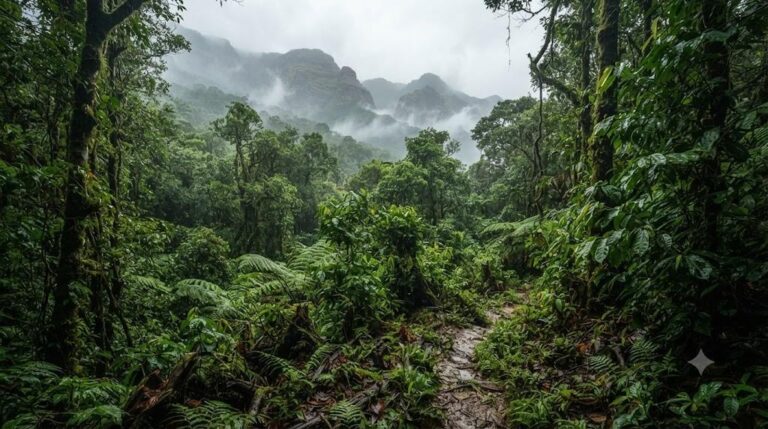
The highland ecology is characterized by a high-altitude mosaic of Shola grasslands—patches of dwarf tropical montane cloud forest tucked into sheltered mountain folds, surrounded by expansive undulating grasslands. These ancient forests act as colossal sponge-like catchments, capturing moisture from passing clouds and slowly releasing crystal-clear water into perennial river systems throughout the year, sustaining millions of farmers across the Deccan plateau.
Talakaveri: The Sacred Cradle of the Cauvery River
Situated on the slopes of the Brahmagiri hill at an elevation of one thousand two hundred and seventy-six meters, Talakaveri is venerated as the holy source of the Cauvery River. Here, a small square stone tank (Kundike) fed by a subterranean natural spring marks the birthplace of the river. Every year in mid-October during the auspicious Tula Sankramana festival, thousands of pilgrims congregate to witness the miraculous ‘Teerthodbhava’—the sudden bubbling surge of water from the spring, signifying the renewal of the goddess’s blessings.
From the temple precinct, a flight of stone steps ascends to the wind-swept summit of Brahmagiri Peak. On clear mornings, hikers standing on this summit are rewarded with breathtaking panoramic vistas: endless ridges of the Western Ghats stretching toward the horizon, draped in shifting blankets of white clouds, with the distant Arabian Sea gleaming in the western glow.
| Highland Destination | Altitude (Meters) | Primary Character | Key Experiential Highlights | Optimal Travel Period |
|---|---|---|---|---|
| Madikeri (District HQ) | 1,150 m | Colonial hill town & administrative hub | Madikeri Fort, Raja’s Seat, Omkareshwara Temple | October to March |
| Talakaveri & Brahmagiri | 1,276 m – 1,608 m | Sacred river origin & alpine mountain trek | Kundike spring, Brahmagiri summit trek, panoramic views | September to February |
| Tadiandamol Peak | 1,748 m | Highest mountain summit in Kodagu | Challenging wilderness trek, Shola forest canopies | October to March |
| Abbey Falls (Monsoon) | 1,070 m | Spectacular forest cascade | Hanging bridge, roaring coffee plantation gorge | July to December |
| Nagarhole Buffer Zone | 800 m | Foothill deciduous wildlife matrix | Kabini river safaris, elephant herds, tiger corridors | October to May |
The Legacy of Coffee: Shade-Grown Arabica and Robusta Heritage
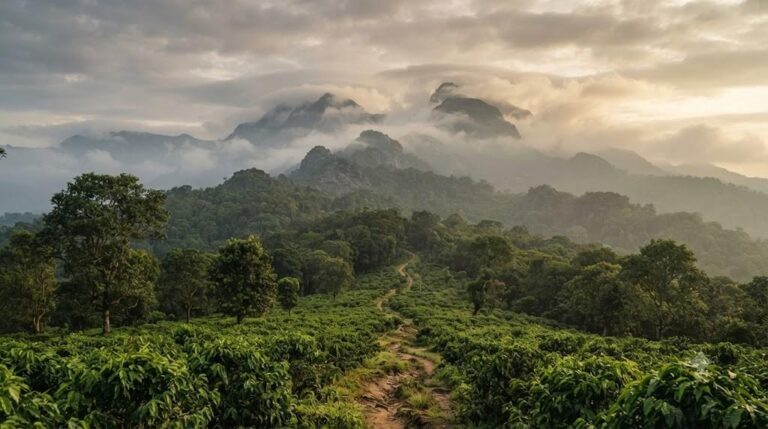
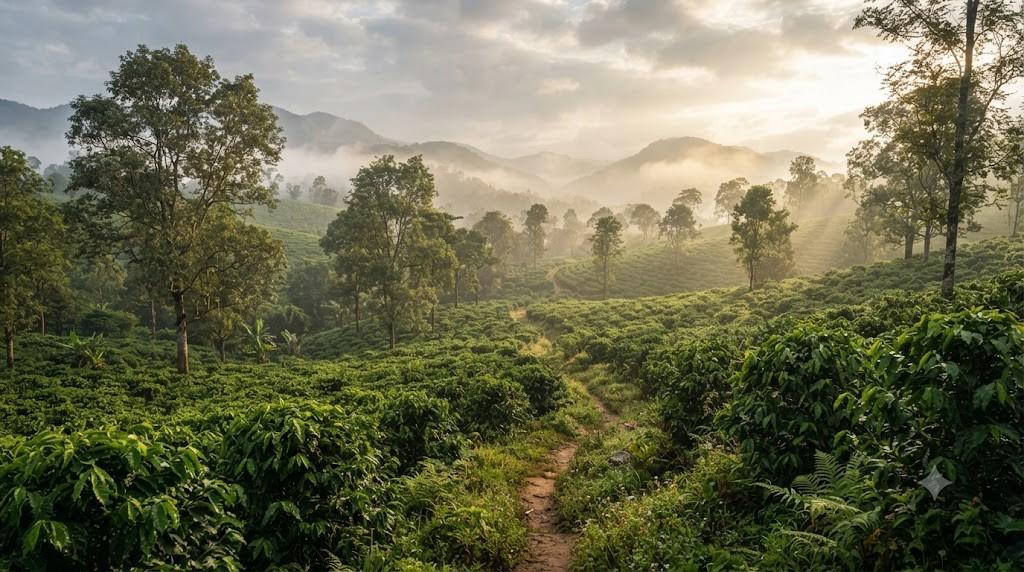
Coorg is the undisputed coffee capital of India, producing over thirty-five percent of the nation’s entire coffee yield. However, unlike the intensive monoculture sun-plantations of South America, Coorg’s coffee is cultivated under a traditional, globally praised two-tier shade canopy system.
Coffee bushes—predominantly high-altitude Coffea arabica and robust Coffea canephora (Robusta)—are planted beneath towering indigenous canopy trees including silver oak, wild fig, rosewood, and jackfruit. Climbing up these massive shade trees are thick vines of black pepper (the ‘black gold’ of Malnad), while beneath the coffee bushes, farmers cultivate aromatic cardamoms, ginger, and sweet bird’s-eye chilies. This multi-layered agro-forestry ecosystem preserves soil moisture, prevents hillside erosion during torrential monsoon rains, and provides a continuous biological habitat for hundreds of bird, butterfly, and orchid species.
The Coffee Harvest Cycle: Blossom to Cup
The annual agrarian calendar of a Coorg plantation is synchronized with natural climatic rhythms:
- The Blossom Showers (March to April): Following the dry winter, the first pre-monsoon rains—revered as ‘blossom showers’—trigger an astonishing phenomenon. Within seventy-two hours of rain, vast valleys of dark-green coffee bushes burst simultaneously into millions of delicate star-shaped white blossoms, filling the mountain air with an intoxicating fragrance reminiscent of jasmine.
- The Monsoon Maturation (June to September): Heavy southwest monsoon rains swell the pollinated berries, which gradually transition from emerald green to hard jade.
- The Winter Harvest (November to February): As berries turn a vibrant crimson red (termed ‘coffee cherries’), plantation workers meticulously hand-pick the ripe cherries. The harvest is processed either by wet pulping (yielding premium washed ‘plantation’ beans) or dry sun-curing on broad outdoor drying yards (producing rich ‘cherry’ beans).
🌿 Agricultural Insight: Shade-Grown Certification
Shade-grown coffee from Kodagu is globally celebrated for its complex, low-acidity flavor profile with subtle notes of dark chocolate, caramel, and wild spices. Because the coffee cherries mature slowly beneath dense rainforest canopies, the beans develop dense, complex sugars that are impossible to duplicate in rapid industrial sun-grown operations.
The Kodava Culture: Martial Heritage, Dress, and Social Customs
Beyond its landscape, the soul of Coorg resides in its indigenous inhabitants: the Kodava community. Renowned for their martial valor, athletic prowess, and egalitarian social traditions, the Kodavas possess an ethno-cultural identity that is distinct from mainstream peninsular Indian societies.
Historically a martial race of warriors and agrarian landholders, Kodavas revere nature, ancestral spirits (Guru Karana), and weapons of defense. Kodava ceremonies do not employ Brahminical priests; instead, family elders and maternal uncles conduct marriages and ancestral rites. The Kodava language (Kodava Takk) is a rich, melodious Dravidian tongue that preserves archaic grammatical roots closely related to Old Kannada and Tamil.
Traditional Attire: The Kupya and the Reverse Pleated Saree
The distinctive formal ceremonial dress of the Kodavas reflects their proud martial background:
- Men’s Attire (Kupya and Chele): Kodava men wear the Kupya—a knee-length, collarless wrap coat made of black or white woolen cloth, secured at the waist by an ornate gold-embroidered crimson silk sash termed the Chele. Tucked into the sash is the legendary Peeche Kathi—an ornate, ivory-handled dagger housed in an engraved silver sheath—while during ceremonial warrior dances, men carry the formidable curved war knife known as the Odi Kathi.
- Women’s Attire (The Kodava Saree): Kodava women drape their sarees in a unique, elegant fashion found nowhere else in India. The pleats of the saree are folded at the back rather than the front, allowing graceful mobility while navigating steep, muddy hillside terrain, while the pallu (decorative end) is brought firmly over the right shoulder and pinned beneath the left arm with an ornate golden brooch.
🏑 Cultural Uniqueness: The Kodava Hockey Festival
Kodagu is universally acclaimed as the ‘cradle of Indian hockey’, having produced dozens of international Olympians and national captains. Every summer, over three hundred distinct Kodava patriarchal clans (okkas) compete in the colossal Kodava Hockey Festival—the largest field hockey tournament on Earth recognized by the Limca Book of Records—where grandmothers, fathers, and teenagers play side-by-side representing their ancestral family names.
Gastronomic Splendor: Pandi Curry, Kachampuli, and Kadambuttu
Coorg gastronomy is bold, earthy, and unapologetically rustic, designed to sustain hardy mountain folk through biting winter chills and torrential monsoon downpours. The culinary philosophy revolves around rice in all its forms, paired with rich, spicy gravies infused with wild forest botanicals.
The Iconic Dishes of Kodagu
- Pandi Curry (The Signature Dish): Tender cubes of pork are braised in an intensely aromatic, dry-roasted spice blend composed of coriander, cumin, black peppercorns, mustard seeds, and cinnamon. The dish achieves its signature near-black color and tantalizing tanginess from the addition of Kachampuli—a thick, fermented black vinegar extracted from the boiled juice of wild Garcinia gummi-gutta fruits.
- Kadambuttu (Steamed Rice Spheres): Fine broken rice flour is cooked with water, hand-rolled into delicate bite-sized spheres, and steamed in woven baskets. These soft, pearl-like dumplings serve as the perfect neutral vessel to soak up the dark, peppery gravy of Pandi Curry.
- Akki Rotti with Koli Curry: Unleavened flatbreads made from kneaded cooked rice and roasted rice flour, patted thin on banana leaves and cooked on a hot griddle until crisp around the edges, paired with a rich country chicken curry simmered in fresh coconut paste and poppy seeds.
- Bamboo Shoot (Baimbale) and Wild Mushroom Curries: During the wet monsoon months, local foragers harvest tender bamboo shoots from dense riverbank groves. The shoots are soaked in running water to remove natural bitterness and simmered with mustard seeds, red chilies, and coconut into Baimbale Curry, celebrated for its unique earthy crunch.
| Traditional Delicacy | Primary Ingredients | Signature Souring / Spice Agent | Culinary Context | Flavor Profile |
|---|---|---|---|---|
| Pandi Curry | Pork, roasted spice paste, onions | Kachampuli (Garcinia vinegar) | Ceremonial feasts & weddings | Tangy, smoky, intensely peppery, rich |
| Kadambuttu | Rice flour, water, ghee | None (neutral accompaniment) | Breakfast and banquet staple | Soft, comforting, delicate texture |
| Baimbale Curry | Tender wild bamboo shoots, coconut | Tamarind, mustard seed tempering | Monsoon seasonal delicacy | Earthy, crunchy, mildly spiced, fragrant |
| Paputtu | Broken rice, grated coconut, milk | Cardamom infusion | Sweet or savory breakfast steamed cake | Fluffy, coconut-rich, aromatic |
| Koli Curry | Country chicken, roasted coriander | Ground coconut paste, Byadagi chili | Sunday family lunches | Robust, hearty, warming, velvety |
Highland Treks and Wilderness Expeditions
For active wilderness explorers, Kodagu provides some of the finest high-altitude trekking trails in the Western Ghats, taking hikers through pristine Shola cloud forests, montane grasslands, and roaring waterfall basins:
The Tadiandamol Summit Trek: Rising to one thousand seven hundred and forty-eight meters, Tadiandamol is the highest mountain peak in Kodagu. The trek begins near the historic Nalknad Palace (built in 1792 by Kodava ruler Chikka Veerarajendra). The trail meanders through dense evergreen canopy before emerging onto wind-swept alpine ridges. The final ascent requires scrambling over steep rocky faces, rewarding climbers at the summit with unforgettable views of rolling green summits disappearing into sea mist.
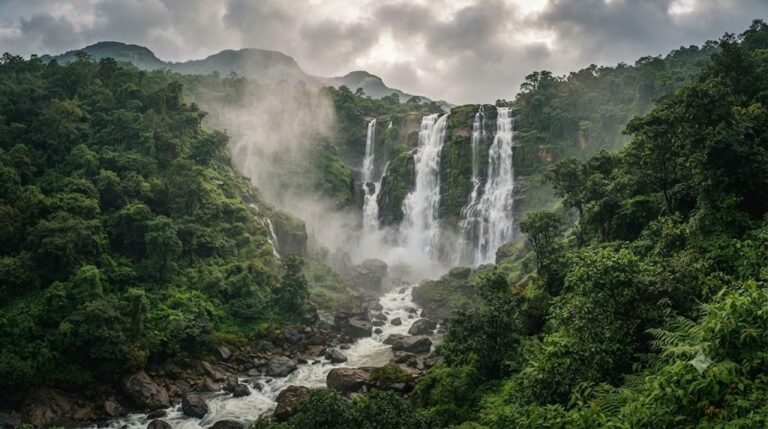
The Roaring Cascades: Abbey and Iruppu Falls: Waterfalls form the lifeblood of Coorg’s landscape. Abbey Falls, located eight kilometers from Madikeri, roars down a seventy-foot vertical drop between private spice and coffee estates, best viewed from an arched hanging pedestrian bridge spanning the spray-filled gorge. In southern Coorg bordering the Wayanad reserve, Iruppu Falls (Lakshmana Tirtha Falls) plunges sixty meters down the Brahmagiri range, revered as a sacred spot where Lord Rama’s brother Lakshmana shot an arrow into the mountain to create fresh water.
Responsible Homestay Tourism and Highland Preservation
The essence of visiting Kodagu lies in staying at an authentic family-managed coffee plantation homestay. Unlike anonymous commercial hotels, staying with a Kodava family allows travelers to experience warm regional hospitality, savor authentic home-cooked meals, and walk through private estate trails guided by passionate planters.
However, protecting Kodagu’s fragile mountain ecology against the pressures of mass commercial tourism demands strict traveler responsibility. Visitors must observe strict eco-guidelines:
- Adhere to Zero-Waste Principles: Never discard plastic water bottles, snack wrappers, or aluminum cans along trekking trails or waterfall gorges. Carry all personal trash back to town centers for proper disposal.
- Respect Water Scarcity and Mountain Rhythms: Even in high-rainfall regions, groundwater storage on steep mountain ridges is limited during summer months. Conserve hot water in homestays, support solar heating systems, and keep noise levels low to respect nocturnal wildlife and peaceful rural villages.
- Support Sustainable Estate Products: Purchase shade-grown artisanal coffee beans, single-origin black pepper, raw wild honey, and authentic homemade fruit preserves directly from local growers and estate cooperatives, ensuring that tourism revenues directly nourish the farming families who protect this highland paradise.
In conclusion, an expedition into Coorg is an encounter with a world of timeless alpine majesty. Between the morning aroma of freshly brewed estate coffee, the ethereal sight of cloud blankets drifting over Tadiandamol, the rhythmic beat of Kodava warrior drums, and the warm hospitality of its people, Kodagu remains an unforgettable highland sanctuary that captures the heart of every traveler.
The Sacred Groves of Kodagu: Devarakadus and Ecological Sanctuaries
A profound yet frequently overlooked cultural and conservation practice in Kodagu is the ancient tradition of Devarakadus (Sacred Groves). For centuries, every traditional Kodava village has preserved dedicated tracts of virgin primary rainforest set aside as communal sanctuaries dedicated to village deities and guardian spirits (such as Ayyappa and Chamundi).
In these sacred groves, the felling of trees, hunting of wild animals, and plucking of wild flowers is strictly prohibited by customary community law. As a consequence, Kodagu maintains over one thousand two hundred individual sacred groves scattered across its landscape—one of the highest densities of sacred natural sites anywhere in the world. These groves function as vital ecological micro-refuges, preserving ancient genetic strains of medicinal plants, wild canopy figs, endemic amphibians, and endangered bird species that have vanished from commercial monoculture plantations.
The Kodava Harvest Festival: Puthari Celebrations
The cultural year of Kodagu culminates in the joyous festival of Puthari (the harvest festival), celebrated during the full moon of late November or early December. Commencing at sunset with the firing of ceremonial gunshots into the night sky, family clans gather in their ancestral homes (Ainmanes). Dressed in traditional Kupya and Chele, the family marches in torch-lit procession to the paddy fields, chanting sacred hymns. Under the moonlight, the elder cuts the first sheaves of golden rice paddy using an ornate sickle, carrying the holy harvest home to be blessed and shared, symbolizing agrarian renewal and community solidarity.
🏡 Architectural Treasure: The Kodava Ainmane
The traditional ancestral clan mansion of Kodagu is known as an Ainmane. Built on elevated stone plinths with steep terracotta-tiled roofs, carved wooden pillars, and central open courtyards (Mund mane), these heritage houses have sheltered multi-generational martial families for centuries, preserving antique weapon racks, heirloom brass oil lamps, and sacred ancestral shrines.